


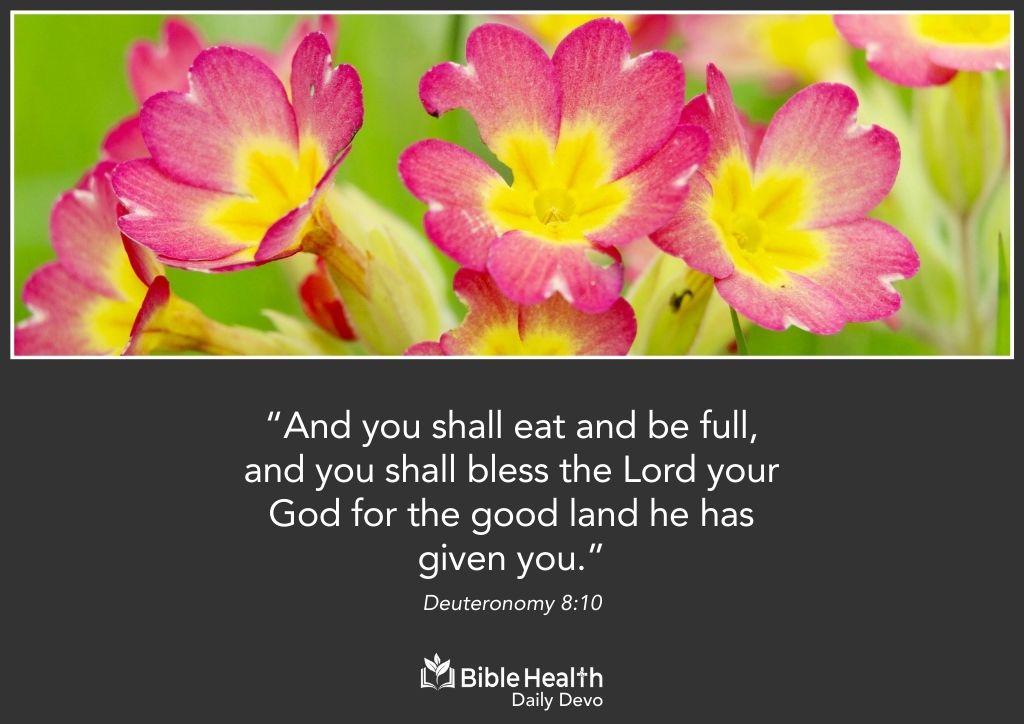


~ Deuteronomy 8:10
Subscribe to this podcast on iTunes | Spotify
Moses spoke these words as Israel prepared to enter a land of abundance after decades of dependence in the wilderness. For years, food had come daily and miraculously. Now they would eat from fields they did not plant and drink from wells they did not dig. God knew prosperity carried a hidden danger.
When provision becomes normal, gratitude can fade. This command was meant to anchor Israel’s memory. Fullness was not meant to lead to pride or forgetfulness, but to worship.
The instruction is strikingly practical. Eat. Be satisfied. Then bless the Lord. Gratitude was to follow provision, not precede it. God was teaching His people to pause after receiving, to acknowledge the Source rather than rush forward distracted by comfort. Forgetting God in seasons of fullness would eventually lead to misplaced confidence and spiritual drift.
This passage speaks directly into Biblical health because it reshapes how we relate to provision and care of the body. God is not indifferent to whether His people are nourished. He notices fullness. He commands gratitude in response to it. Eating was not merely functional. It was meant to be relational, a reminder of God’s goodness and faithfulness.
When gratitude is practiced, our relationship with food and provision changes. We stop consuming mindlessly and begin receiving intentionally. Gratitude slows us down. It helps us recognize when enough is enough. It guards us from excess and from the constant dissatisfaction that drives unhealthy patterns. God does not cause sickness, but forgetfulness often leads people away from wisdom and into habits that quietly erode strength.
Gratitude also protects the heart. It reminds us that our health, our energy, and our ability to serve are gifts, not guarantees. When we bless the Lord after being filled, we keep our lives oriented toward stewardship rather than entitlement. We learn to care for our bodies not as possessions to indulge, but as gifts to honor.
Moses knew Israel’s greatest threat was not hunger, but forgetting God once hunger was satisfied. The same warning applies today. Remembering the Giver keeps us grounded, humble, and aligned with God’s purposes. Gratitude becomes a safeguard that preserves both faith and strength.
God’s design has always been life giving. He provides, He satisfies, and He invites His people to respond with thanksgiving that shapes how they live.
Prayer: Father, thank You for providing what I need and for sustaining my life each day. Help me slow down enough to recognize Your goodness and respond with gratitude. Teach me to honor You in seasons of fullness as well as need. Shape my heart to remember You as the source of every good gift so I may live wisely and serve faithfully. Amen.