


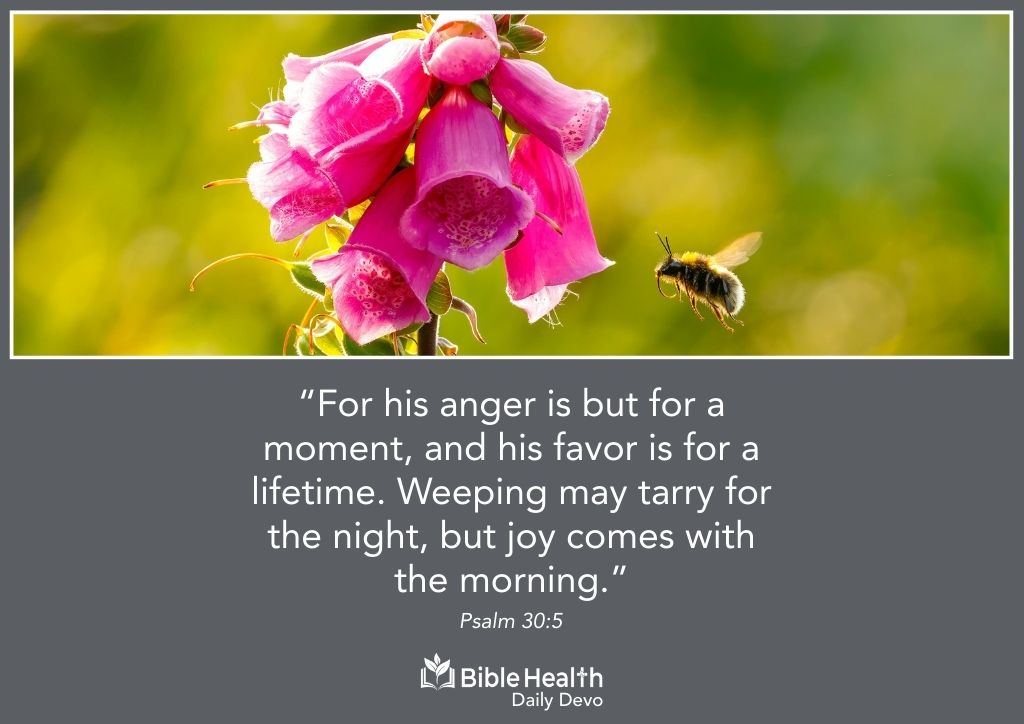


~ Psalm 30:5
Subscribe to this podcast on iTunes | Spotify
David wrote Psalm 30 as a song of thanksgiving after deliverance. While the specific circumstance is debated, the emotional movement is clear. This is a psalm shaped by contrast. Night and morning. Weeping and joy. Moment and lifetime. David is not denying pain. He is placing it within a larger frame of God’s faithfulness.
The night represents seasons of distress, uncertainty, or loss. Night limits vision. It quiets activity. It can feel endless while it lasts. David acknowledges that sorrow is real and that it lingers. Yet he refuses to define life by that season alone. Morning comes. God’s favor outlasts the night.
The word translated “tarry” suggests temporary lodging, not permanent residence. Weeping visits, but it does not own the house. Joy arrives with the morning not because circumstances instantly change, but because God’s sustaining presence remains. God does not cause sickness, suffering, or breakdown. He allows seasons, but His favor is not seasonal. It is constant.
This verse fits naturally into spring and new beginnings. Spring is creation’s morning. After cold and dormancy, life returns. Not all at once. Gradually. Quietly. The ground does not rush. It responds. In the same way, renewal after hard seasons often unfolds slowly. Psalm 30:5 reassures us that delay is not denial.
This truth speaks clearly into Biblical health. The body experiences nights as well. Periods of fatigue, stress, or imbalance can feel discouraging. Healing and restoration often require patience. The nervous system needs signals of safety before it can recover. Joy, hope, and reassurance support that process. When fear dominates, recovery slows. When hope is restored, the body often follows.
Morning joy does not require pretending the night never happened. It acknowledges what was endured while refusing to remain there. This applies to health habits too. Past neglect or excess does not disqualify future renewal. God made the body with capacity to respond when conditions change.
Choosing real, God made foods over ultra processed ones is often part of that shift. Ultra processed foods frequently appeal during emotional nights, offering quick comfort while disrupting long term balance. Returning to simpler nourishment supports the body gently, like morning light after darkness.
Psalm 30:5 also invites trust in timing. Joy comes with the morning, not on demand. Healing does not always follow our schedule, but it does follow God’s order. New beginnings are not rushed. They arrive when light increases.
As this spring season unfolds, this verse offers reassurance. Night does not get the final word. God’s favor does. Morning brings with it the opportunity to begin again, steadier and wiser than before.
Prayer: Father, thank You that sorrow is not permanent and that Your favor lasts beyond every hard season. Help me trust You in the night and remain open to the joy You bring with the morning. Guide my habits and choices toward renewal, patience, and hope. Teach me to welcome new beginnings with gratitude and confidence in Your faithful care. Amen.