


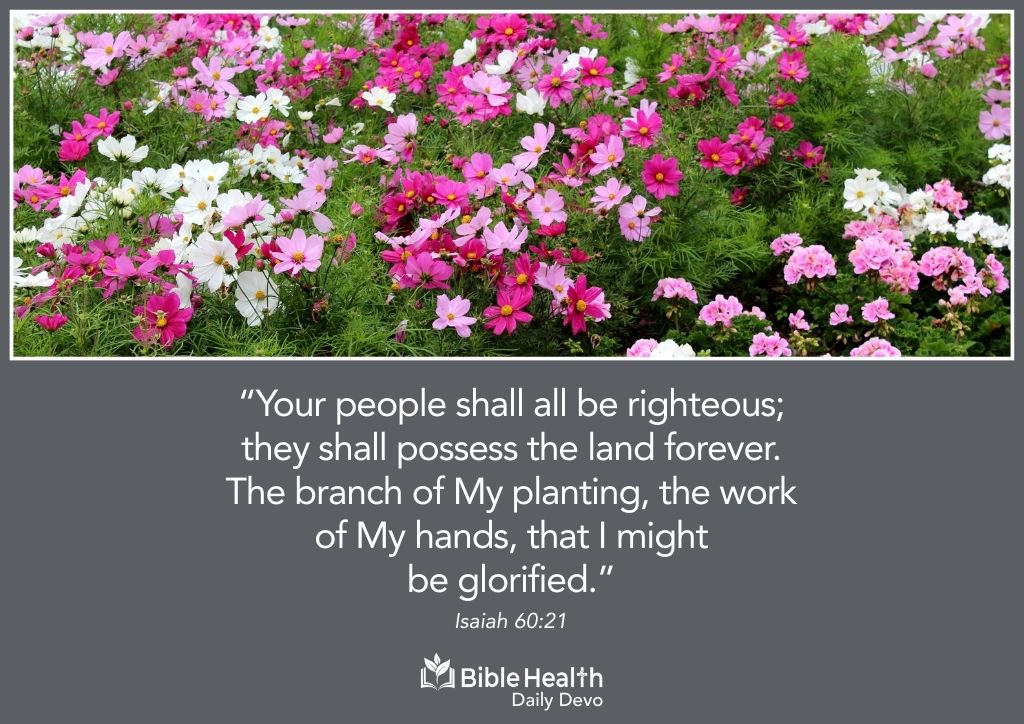


~ Isaiah 60:21
Listen on Apple Podcasts | Spotify
Isaiah speaks this promise to a people who had known exile, loss, and humiliation. Their identity had been shaped by failure and displacement, yet God reframes their future with clarity and hope. He describes His people not as survivors barely holding on, but as His own planting. Their restoration is not accidental. It is intentional, purposeful, and rooted in His work.
The emphasis in this verse falls on origin and outcome. God is the planter. The people are His workmanship. Their righteousness is not self-produced. It is given, cultivated, and sustained by Him. The result is fruitfulness that endures. Possessing the land forever points to stability, inheritance, and continuity. God’s goal is not temporary improvement, but lasting restoration that reflects His glory.
Good works flow naturally from this identity. They are not performed to earn favor, but to express what God has already done. When God plants, growth follows. When God restores, fruit appears. Good works are the visible evidence of an inward work already accomplished by His hand.
This truth connects directly to Biblical health. God does not cause sickness, and good works are not limited to public acts or ministry roles. Stewarding the body well is also a good work. Caring for health allows a person to remain present, capable, and faithful over time. Strength preserved becomes service enabled. Clarity protected becomes discernment offered.
God-made foods support this kind of fruitfulness because they nourish without depleting. They sustain energy, patience, and focus. Ultra-processed foods often promise productivity while quietly undermining it. They drain consistency and cloud judgment, making good works harder to sustain. Choosing nourishment that aligns with God’s design is not self-centered. It is preparatory. It equips a person to remain fruitful.
Good works also require rootedness. Isaiah’s imagery of planting reminds us that lasting fruit grows from stable soil. Constant urgency and overextension pull life out by the roots. When rhythms of rest and nourishment are honored, the body is better able to support service without burnout. This stability glorifies God because it reflects trust in His design rather than dependence on human striving.
Importantly, the purpose of fruitfulness is God’s glory. Good works are not meant to draw attention to the individual, but to the One who planted and sustained them. When life bears fruit steadily and humbly, it points beyond itself.
Being chosen for good works means God intends His people to contribute life, order, and blessing in the world. These works are prepared by Him and sustained through alignment with His wisdom. Fruitfulness is not forced. It is cultivated through faithfulness.
Prayer: Father, thank You for planting my life with intention and purpose. Help me remember that any good work I walk in flows from what You have already done. Teach me to care for my body and rhythms so I remain rooted, steady, and available for the work You have prepared. Let my life bear fruit that lasts and brings glory to You, reflecting Your wisdom, care, and faithfulness in all things.
