


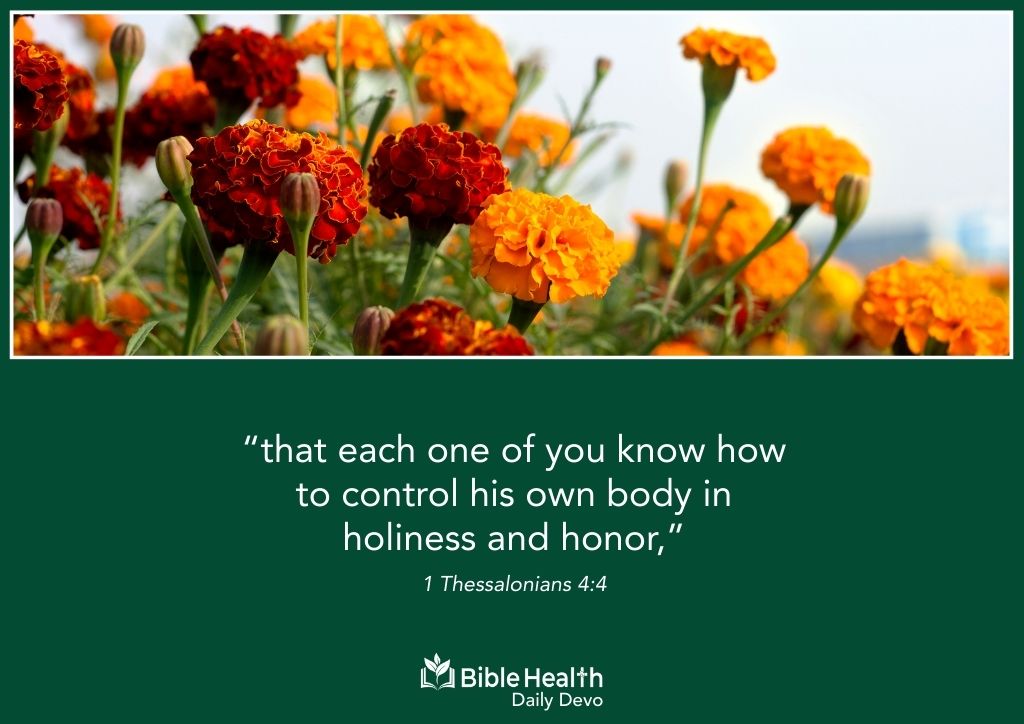


~ 1 Thessalonians 4:4
Listen on Apple Podcasts | Spotify
Paul writes to the Thessalonian church to clarify what a faithful life looks like in everyday practice. These believers lived in a culture where self-indulgence was common and restraint was often viewed as unnecessary.
Paul does not frame holiness as withdrawal from life, but as ordered living. Self-control is presented as knowledge that must be learned and practiced. It is not instinctive. It is intentional.
The phrase “know how to control” points to skill developed over time. Paul assumes that believers can grow in mastery rather than remain reactive. Self-control here is not suppression or harshness. It is the ability to govern the body in a way that reflects honor.
Honor directs attention upward toward God and outward toward others. It recognizes that the body has purpose beyond momentary desire.
Paul’s instruction connects self-control to holiness. Holiness is not moral isolation. It is alignment with God’s design. When the body is governed by impulse alone, it often leads to disorder and regret. When the body is stewarded with intention, it supports peace and stability. Self-control protects dignity. It keeps desire from becoming demand.
This teaching matters for Biblical health. God does not cause sickness, but lack of self-control often contributes to strain. When appetites consistently override wisdom, the body bears the cost. Self-control restores balance. It allows choices to be guided by discernment rather than urgency. Over time, this supports resilience and clarity.
Food provides a practical example. God-made foods nourish in ways the body recognizes and can use. Choosing them often requires restraint because ultra-processed foods are engineered for speed, intensity, and overconsumption. These products encourage eating beyond need and awareness.
Self-control interrupts that pattern. It creates space to listen to hunger and fullness rather than override them. This is not restriction for its own sake. It is honoring the body’s design.
Self-control also shapes rhythm. Sleep, rest, and recovery depend on boundaries. Without them, life becomes reactive and exhausting. With them, the body can repair and regulate. Self-control makes room for consistency, which supports long-term health more than extremes ever could.
Paul’s words remind believers that self-control is learned within relationship. It grows as the Spirit reshapes desires and strengthens resolve. This process is patient. It does not demand instant mastery. It invites steady practice.
Living with self-control does not diminish joy. It protects it. By governing the body with honor, life becomes less chaotic and more grounded. Self-control frees people to live intentionally rather than be driven by whatever presses loudest in the moment.
Prayer: Father, teach me to live with self-control that reflects holiness and honor. Help me steward my body and desires with wisdom rather than impulse. Strengthen me to choose what aligns with Your design, especially when restraint feels difficult. Shape my habits with patience and consistency, and let self-control bring peace, clarity, and freedom as I walk with You.
