


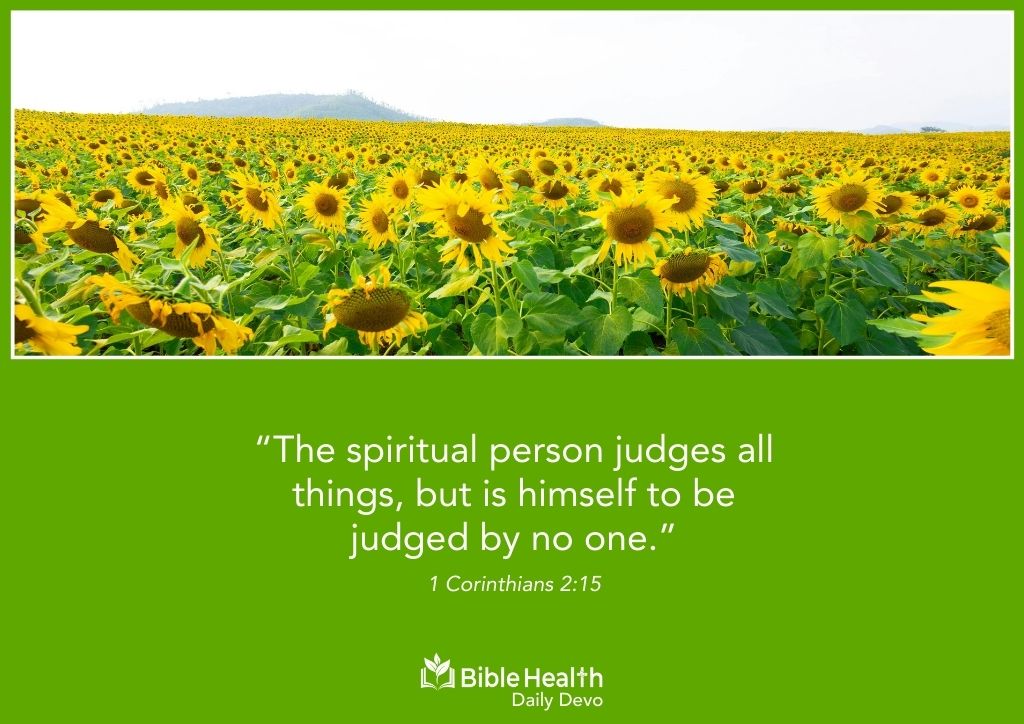


~ 1 Corinthians 2:15
Listen on Apple Podcasts | Spotify
Paul writes 1 Corinthians to a church surrounded by competing voices, philosophies, and loyalties. Many believers were measuring wisdom by eloquence, status, or human reasoning. In chapter 2, Paul draws a sharp distinction between natural understanding and spiritual discernment. He explains that God’s wisdom is revealed by the Spirit and cannot be fully evaluated by human standards alone.
When Paul says the spiritual person judges all things, he is not promoting criticism or superiority. The word judge here refers to discernment. It means the ability to evaluate rightly, to see beneath the surface, and to distinguish what aligns with God’s truth from what merely appears persuasive. Discernment is not suspicion. It is clarity shaped by the Spirit’s presence.
Paul contrasts this with the natural person who lacks spiritual perception. Without the Spirit, God’s wisdom seems foolish or unnecessary. This is why the spiritual person is not ultimately judged by human opinion. Their reference point is different. Discernment flows from relationship with God, not from consensus or trend.
This teaching matters because discernment protects believers from being shaped by every voice they encounter. Life in Christ is not lived on autopilot. It requires attentiveness. The Spirit provides insight that helps believers navigate complexity without fear or confusion. Discernment allows engagement without compromise.
This truth applies clearly to Biblical health. God does not cause sickness, but lack of discernment often leads to harm. Many habits are normalized simply because they are common. Discernment asks whether those habits align with God’s design rather than cultural convenience. It invites evaluation rather than imitation.
Food provides a clear example. God-made foods nourish in ways the body recognizes and can use. Ultra-processed foods are often marketed as modern solutions, yet they frequently disrupt hunger cues, energy balance, and long-term well-being.
Discernment looks beyond packaging and claims. It considers outcomes, patterns, and alignment with how the body was created to function. Choosing real food becomes an act of wisdom guided by truth rather than trend.
Discernment also shapes responses to information overload. Health advice, opinions, and systems can be overwhelming. The Spirit helps filter what is helpful from what is distracting or harmful. Discernment reduces anxiety because it anchors decisions in truth rather than pressure. It allows confidence without rigidity.
Living with discernment does not mean rejecting everything unfamiliar. It means testing what is presented and holding fast to what is good. This posture creates steadiness. It keeps life from swinging between extremes and protects both body and soul from unnecessary strain.
Paul reminds believers that discernment is a gift cultivated through closeness to God. As the Spirit leads, understanding deepens. Life becomes ordered not by noise, but by truth.
Prayer: Father, thank You for giving Your Spirit to lead me into truth. Teach me to live with discernment shaped by Your wisdom rather than human opinion. Help me evaluate my choices, habits, and influences with clarity and humility. Guide me to steward my body and life in alignment with Your design, and grant me peace as I trust Your Spirit to direct my steps.
