


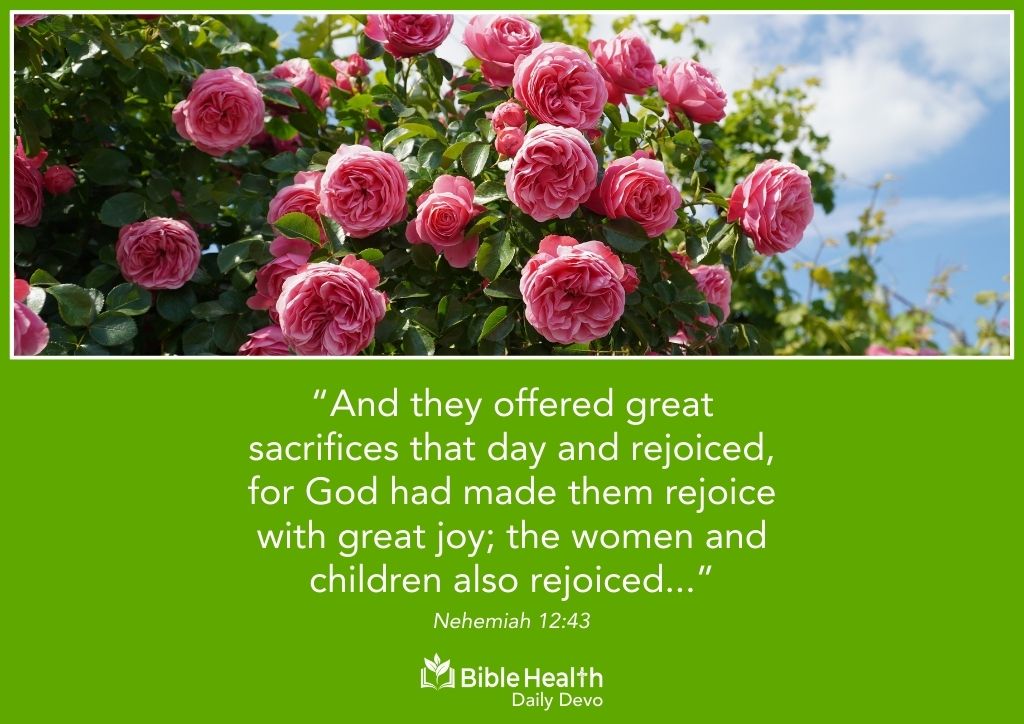


~ Nehemiah 12:43
Subscribe to this podcast on iTunes | Spotify
Nehemiah 12 records a moment of celebration after long years of rebuilding and resistance. Jerusalem’s walls were finished, but this verse makes clear that completion alone was not the goal. Joy was. The people gathered to dedicate the wall, not with quiet relief, but with audible rejoicing.
Scripture emphasizes that God made them rejoice. Joy did not arise merely from achievement. It was given by God in response to faithfulness and restoration.
This context matters. The rebuilding had involved opposition, fatigue, and perseverance. Joy came after endurance. It was not shallow excitement. It was settled gladness rooted in God’s faithfulness.
The sacrifices offered that day were acts of worship, acknowledging that restoration belonged to God, not human effort. Joy flowed from gratitude and trust, not from self-congratulation.
The phrase “heard far away” highlights joy’s outward nature. True joy does not stay contained. It carries strength, testimony, and life beyond the individual. Joy marked Jerusalem as restored and alive. It signaled that God had been present in the process and faithful to His promises.
This truth applies naturally to Biblical health. God does not cause sickness, and joy plays a vital role in resilience. Joy is not denial of hardship. It is the ability to recognize God’s goodness within it.
When joy is absent for long periods, the body often remains in a state of tension. Joy supports relaxation, recovery, and emotional stability. It allows the body to move out of constant defense.
Joy also shapes motivation. Health pursued without joy often becomes rigid or exhausting. Health pursued with joy becomes sustainable. Joy reminds us that care for the body is not punishment, but stewardship. It transforms routine choices into expressions of gratitude rather than obligation.
Food can reflect this posture. God-made foods are meant to be received with gladness and appreciation. They nourish and satisfy without manipulation. Ultra-processed foods often promise pleasure but fail to deliver lasting joy. They stimulate briefly, then leave emptiness.
Choosing real food can support joy by restoring connection between nourishment and gratitude. Eating becomes an act of care rather than escape.
Nehemiah’s account reminds us that joy is communal and embodied. Women and children rejoiced together. Joy touched all ages and spread outward. In health, shared joy strengthens consistency. It reinforces habits that support life rather than isolate effort.
Living with joy does not require perfect circumstances. It requires recognition of God’s presence and provision. Joy grows when faithfulness is acknowledged and gratitude is practiced. God delights in giving joy to His people because it reflects trust in His goodness.
Living with joy allows strength to rise without striving. It lightens burdens and renews perspective. Joy does not ignore the past. It celebrates what God has done and trusts Him for what lies ahead.
Prayer: Father, thank You for the gift of joy that comes from Your faithfulness. Help me receive joy as strength rather than wait for perfect conditions. Teach me to steward my body and daily habits with gratitude and gladness. Restore joy where weariness has settled, and let my life reflect the quiet strength and testimony that come from trusting You.