


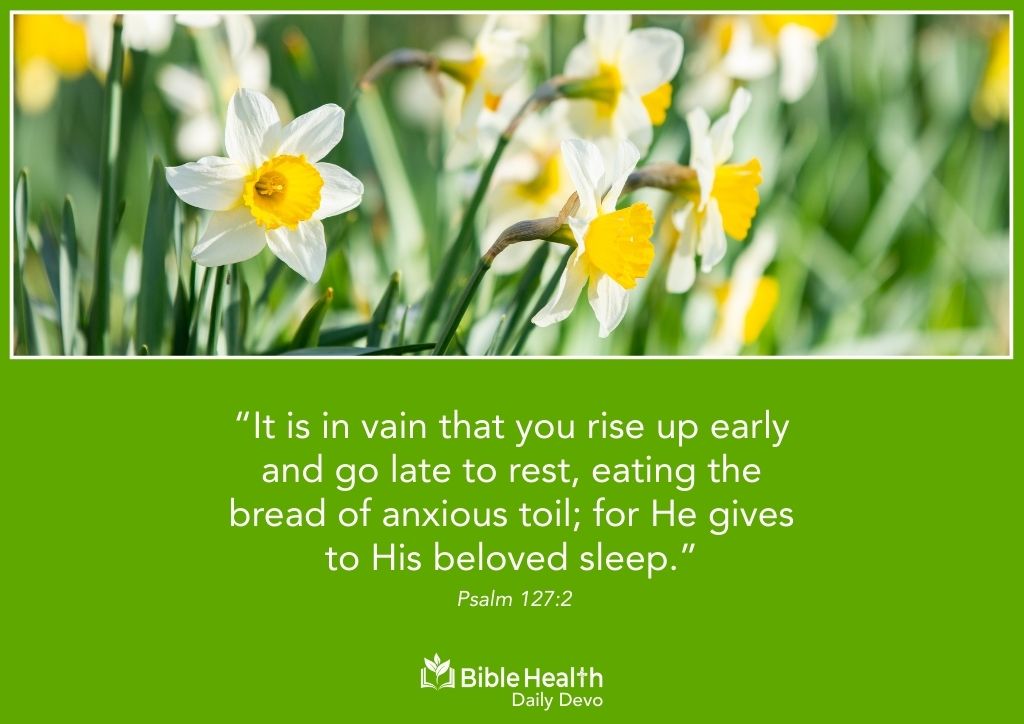


~ Psalm 127:2
Subscribe to this podcast on iTunes | Spotify
Psalm 127 is attributed to Solomon and centers on a simple but often resisted truth. Life flourishes only when it is built with God. The psalm addresses labor, family, and security, reminding God’s people that human effort, apart from divine provision, cannot produce lasting good. Verse two confronts a mindset of relentless striving.
Rising early and resting late were common images of diligence in the ancient world, yet Solomon exposes how diligence turns hollow when driven by anxiety rather than trust.
The phrase “anxious toil” describes labor fueled by fear and self-reliance. In Hebrew, the word carries the idea of pain mixed with worry. This is not productive work done in faith, but exhausting effort rooted in the belief that everything depends on us.
God does not condemn work. He corrects anxious striving. The contrast is striking. While anxious labor consumes energy, God gives sleep to those He loves. Rest is portrayed as a gift, not a reward earned after collapse.
This verse does not teach laziness. It teaches order. God designed work and rest to function together. When rest is neglected, trust erodes. When trust erodes, anxiety multiplies.
Solomon points out that provision ultimately comes from the Lord, not from extended hours or constant vigilance. Sleep becomes a sign of trust. To rest is to acknowledge God’s sovereignty over outcomes.
This truth carries deep relevance for Biblical health. The body responds to anxious toil with tension and depletion. Chronic stress disrupts repair, digestion, and resilience. God does not cause sickness, but anxiety-driven living can weaken the body over time.
Rest supports healing processes that God designed into creation. Sleep allows the nervous system to reset and the body to restore what was depleted.
This principle also touches nourishment. Eating the “bread of anxious toil” suggests consuming what is convenient under pressure. Ultra-processed foods thrive in hurried, stressed environments. They are engineered for speed, not nourishment.
God-made foods invite presence, gratitude, and rhythm. They work in harmony with rest, not urgency. Choosing real food supports the body in ways that align with God’s design.
God reminds us that rest is not wasted time. It is an act of faith. Trust quiets the soul. A quiet soul supports a healthier body. When life is ordered around God’s provision rather than fear, rest becomes restorative instead of elusive.
Prayer: Father, thank You for caring about my work, my rest, and my well-being. Forgive me for the times I have lived as though everything depends on my effort. Teach me to trust You with my outcomes and my needs. Help me honor the rhythms You designed, choosing rest and nourishment that reflect faith rather than anxiety. I receive Your gift of rest today with gratitude. Amen.