


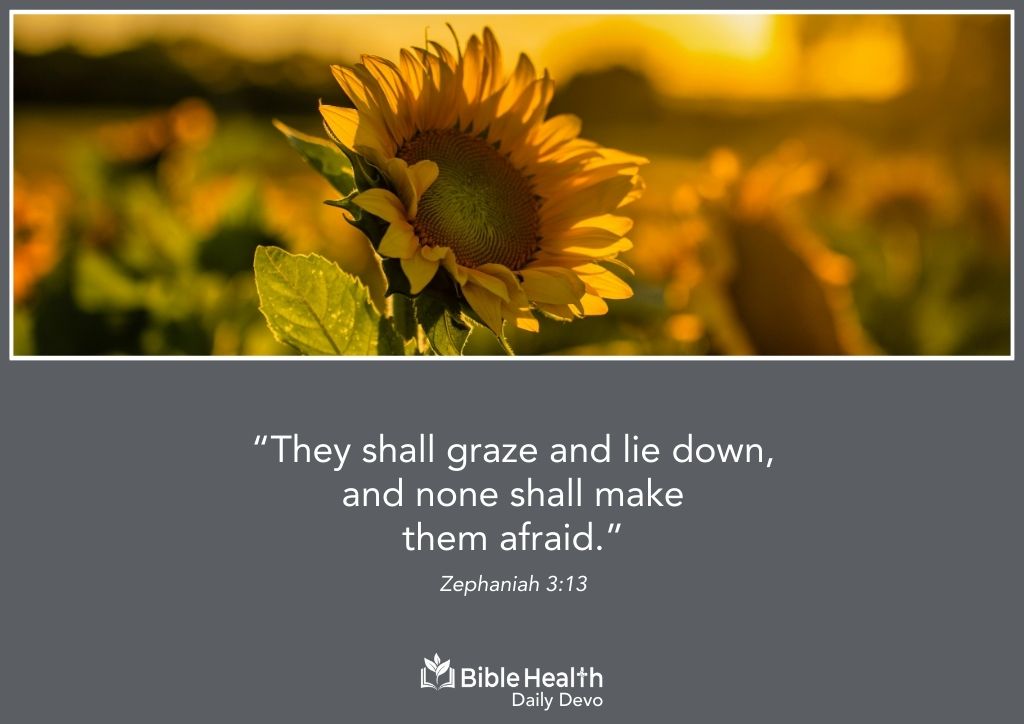


~ Zephaniah 3:13
Listen on Apple Podcasts | Spotify
Zephaniah delivers this promise after announcing judgment and purification. God is describing a people refined, restored, and returned to safety. The image is intentionally gentle. Grazing and lying down are postures of peace, not vigilance. Fear has been removed. Threat has lost authority. What remains is quiet provision and rest.
This picture would have resonated deeply with an audience familiar with danger, displacement, and uncertainty. To lie down without fear meant trust had been restored. God was not only removing external threats. He was reordering the internal state of His people. Hope is revealed here not as excitement about the future, but as safety in the present.
Hope in Scripture is often misunderstood as optimism. Biblical hope is confidence grounded in God’s faithfulness. Zephaniah’s vision shows hope expressed through calm. When fear no longer governs behavior, the soul rests. This kind of hope does not deny past loss. It testifies that restoration is real and trustworthy.
This truth speaks clearly into Biblical health. God does not cause sickness, but fear is a powerful stressor that disrupts the body over time. Constant vigilance keeps the nervous system activated, impairing digestion, repair, sleep, and immune resilience. Hope signals safety. When fear subsides, the body is better able to restore balance.
Hope also shapes environments. A life lived without fear seeks simplicity rather than excess. Choices become less reactive. God-made foods align with this posture because they nourish predictably and steadily. They support the body’s trust in provision.
Overstimulating inputs, whether from ultra-processed foods, endocrine-disrupting body care, or harsh chemical cleaners, often amplify stress by confusing biological signals. Reducing these exposures supports the conditions of calm and trust reflected in this passage.
The promise that none shall make them afraid also points to community. Fear isolates. Hope restores shared peace. Homes, workplaces, and daily rhythms become safer spaces when fear is not driving decisions. Clean air, gentler products, nourishing meals, and unhurried schedules all contribute to environments where hope can remain active rather than fragile.
Hope is not passive waiting. It is settled confidence that allows rest before resolution is fully visible. Zephaniah shows that God’s restoration includes removing fear as much as removing threat. This internal shift is essential for healing, endurance, and joy.
Being chosen for hope means God intends His people to live without constant alarm. Hope steadies the heart and signals safety to the body. It allows life to be lived from trust rather than defense.
Prayer: Father, thank You for being a God who removes fear and restores peace. Help me live from hope that trusts Your care rather than fearing what might come. Teach me to create rhythms and environments that support calm, rest, and confidence in You. Quiet the places of anxiety in my heart and body, and let Your hope guide my choices so I can lie down in trust, knowing You are faithful to protect and provide.
