


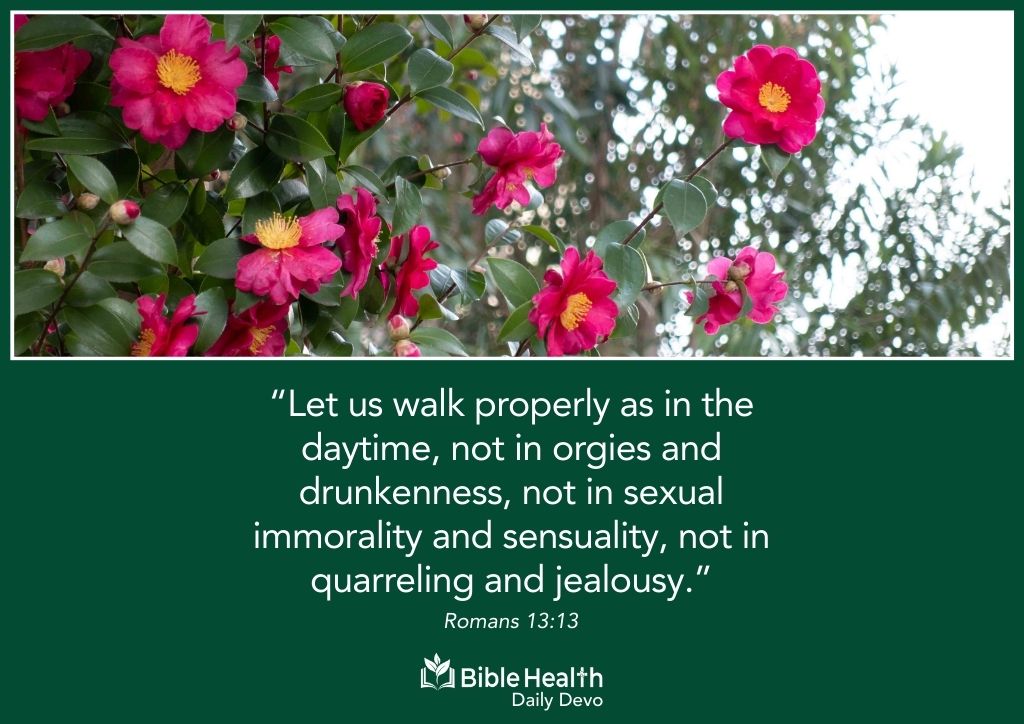


~ Romans 13:13
Subscribe to this podcast on iTunes | Spotify
Paul wrote these words as part of a broader call to wakefulness. He had just reminded believers that the night was far gone and the day was at hand. His concern was not merely moral failure, but misplaced formation. How a person walks, meaning how they live habitually, reveals what is shaping their desires.
The contrast Paul draws is between living openly and living impulsively. “Daytime” language points to clarity, visibility, and intention. The behaviors he lists are not random. They share a common thread. They are all driven by unchecked appetite and reaction. Paul is not isolating individual sins. He is exposing a pattern of living where desire leads and wisdom follows.
This passage speaks clearly into Biblical health.
Self control is deeply connected to environment and rhythm. Walking properly implies awareness of how daily patterns influence behavior. When life is lived in a constant state of stimulation or indulgence, restraint becomes harder. God does not cause disorder or loss of control, but environments that normalize excess quietly train desire to expect it.
Paul’s instruction is not about hiding behavior. It is about aligning life with clarity. Walking “as in the daytime” means choosing patterns that can withstand light. Self control thrives where habits are intentional rather than concealed or automatic. This kind of walking requires discernment about what we expose ourselves to repeatedly.
Honoring God with our health fits naturally here. What shapes desire also shapes the body. When stimulation is constant and appetite is indulged without reflection, internal balance erodes. Choosing restraint in daily rhythms protects clarity and steadiness. Self control grows when life is simplified and ordered rather than crowded and reactive.
Paul’s list also highlights relational cost. Quarreling and jealousy are included alongside physical excess. This reminds us that lack of restraint affects more than the body. It strains relationships and erodes peace. Self control supports harmony by reducing reactivity and comparison, allowing patience and discernment to guide response.
The call to walk properly is not heavy handed. It is invitational. Paul assumes believers are capable of choosing differently because light has already come. Self control is possible because awareness has been given. The question is whether that awareness will shape daily decisions.
This passage encourages examination without shame. What rhythms am I walking in? What habits are shaping my expectations? These questions help identify where restraint may be needed. Self control is not about perfection. It is about direction.
Biblical health grows where life is lived deliberately rather than impulsively. When we guard what shapes desire, clarity increases and peace becomes more accessible. Paul reminds believers that walking in the light is not restrictive. It is stabilizing.
Prayer: Father, help me walk with clarity and intention. Show me where my habits or environments have been shaping desire in unhealthy ways. Teach me to choose restraint that supports peace and wisdom. Guide my daily rhythms so self control grows naturally, and my life honors You with steadiness, discernment, and care. Amen.