


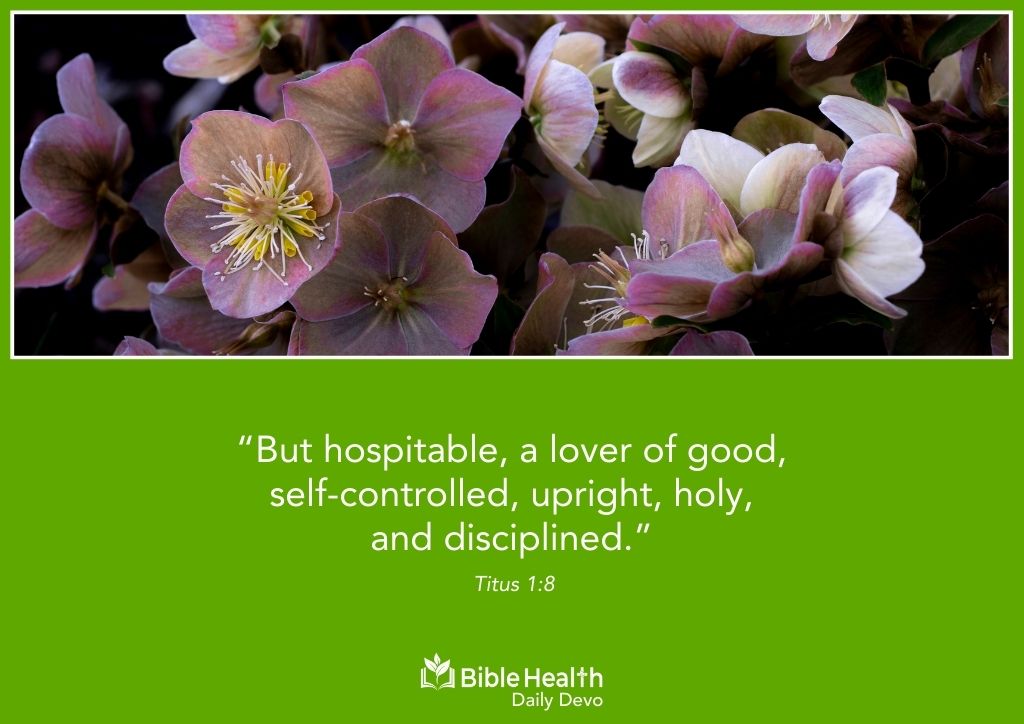


~ Titus 1:8
Subscribe to this podcast on iTunes | Spotify
Paul wrote these words while outlining the qualities required of leaders in the church. At first glance, this verse appears to be about leadership qualifications, but its deeper purpose is formation. Paul was not describing an elite category of Christians. He was describing what maturity looks like when faith has taken root and begun shaping daily life.
The word translated “self-controlled” carries the idea of inner restraint that governs outward behavior. It describes a person whose desires are no longer impulsive or dominating, but ordered. Paul places self-control in the middle of relational and moral qualities because it quietly supports them all. Without restraint, hospitality becomes obligation, goodness becomes inconsistent, and discipline becomes unstable.
This verse speaks clearly into Biblical health.
Self-control is not about personality or temperament. It is learned. Paul expected that life with Christ would gradually shape how people relate to appetite, emotion, and impulse. When restraint is absent, even good intentions can become distorted. Desire begins to lead rather than serve. God does not cause imbalance, but a lack of self-governance often produces it slowly and quietly.
Paul’s placement of self-control alongside hospitality and love of good is important. Restraint is not isolation. It is relational wisdom. When desires are governed, we are better able to be present, generous, and attentive to others. Self-control preserves emotional availability. It keeps us from being consumed by our own urges, schedules, or comforts.
This applies directly to how we steward our bodies and daily rhythms. When restraint is practiced, choices become more intentional. Eating, resting, and working are no longer reactive responses to stress or boredom. Instead, they reflect care, discernment, and gratitude. Honoring God with our health supports this discipline by reducing unnecessary strain and reinforcing steadiness over time.
Paul also connects self-control to holiness and discipline. These are not rigid traits. They describe alignment. A life shaped by restraint becomes consistent. There is less contradiction between belief and behavior. Over time, this consistency builds trust, both internally and within community. A self-controlled life carries credibility because it reflects integrity rather than impulse.
This verse reminds us that maturity is not dramatic. It is steady. Self-control often looks ordinary. It shows up in repeated choices made quietly and faithfully. It grows through practice, reflection, and grace. Biblical health develops where restraint is embraced as wisdom rather than resisted as restriction.
Paul did not frame self-control as a burden. He presented it as a marker of a life that has learned to live well. When desire is governed, peace becomes more accessible and obedience more sustainable. Over time, restraint creates room for joy that is not driven by excess or urgency.
Prayer: Father, teach me to practice self-control with wisdom and humility. Help me recognize where impulse has begun to lead instead of truth. Shape my habits so they reflect restraint that supports clarity, peace, and faithfulness. Guide my daily choices so they honor You and protect the life You have entrusted to me. Amen.