


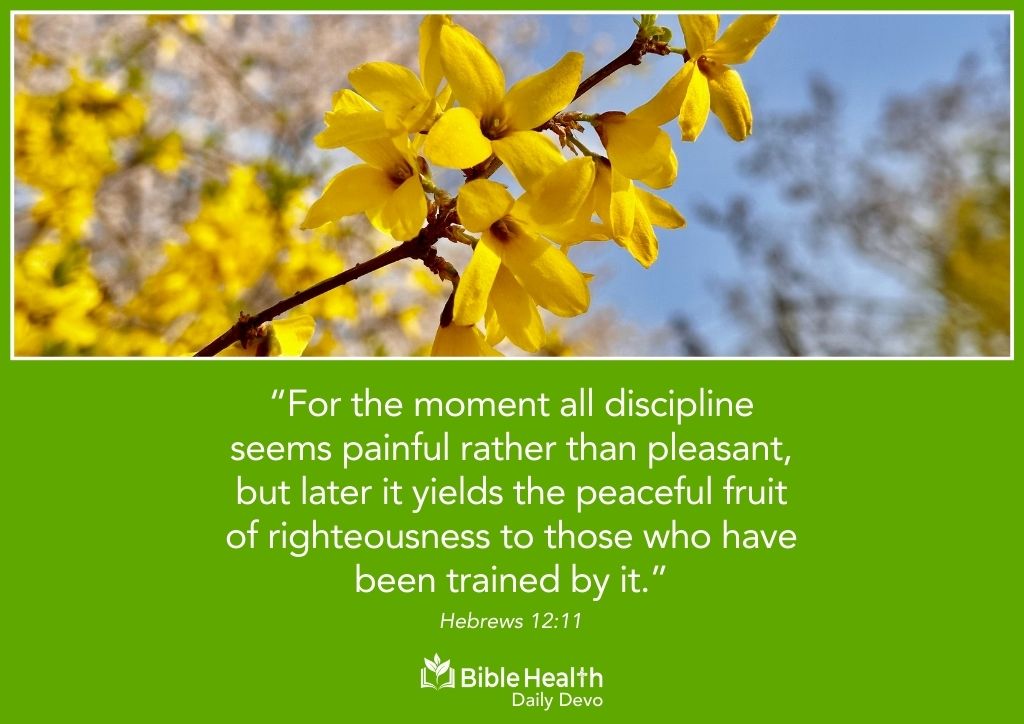


~ Hebrews 12:11
Subscribe to this podcast on iTunes | Spotify
The writer of Hebrews is addressing believers who were growing weary under pressure. Their hardship was tempting them to interpret difficulty as abandonment. Instead, Scripture reframes discipline as purposeful training. Not punishment. Not harm. Formation. Discipline, rightly understood, is evidence of care and direction.
The word translated “trained” reflects an ongoing process, not a single event. It is the language of repeated practice. Discipline does not yield immediate comfort. It yields formation. The fruit appears later, after consistency has done its work. This is crucial for understanding self control. Restraint is rarely pleasant in the moment, but it produces peace over time.
This passage speaks clearly into Biblical health.
Self control often feels uncomfortable because it interrupts familiar patterns. The body resists change. The mind protests delay. Hebrews does not deny this tension. It names it honestly. Discipline feels painful at first. But discomfort is not the same as harm. God does not cause sickness or breakdown, yet He does allow training that stretches us beyond indulgence and ease.
The contrast Hebrews draws is between immediate pleasure and long term peace. When desire governs decisions, relief may come quickly, but stability erodes slowly. Discipline reverses that pattern. It may feel restrictive early on, but it restores order and calm over time. Self control becomes the pathway through which peace is cultivated rather than chased.
This has practical implications for daily life. Training requires repetition. It requires choosing restraint even when results are not yet visible. Honoring God with our health fits naturally here. Bodies and habits respond to consistency. When discipline is practiced gently and faithfully, the body adapts. What once felt difficult begins to feel normal.
Hebrews also emphasizes who benefits from discipline. Not everyone who encounters difficulty is trained by it. Training requires participation. Self control is not automatic. It grows when restraint is chosen intentionally rather than resisted. Those who submit to training begin to experience its fruit. Peace is not forced. It emerges.
The phrase “peaceful fruit of righteousness” points to alignment. Righteousness here is not performance. It is coherence. Life begins to move in one direction instead of being pulled by competing desires. This coherence reduces internal conflict and supports steadiness in both faith and practice.
Biblical health grows where discipline is understood as training rather than punishment. When restraint is embraced as formative, self control becomes sustainable. Hebrews reminds believers that peace is not found by avoiding discipline, but by allowing it to do its work.
Learning to submit to training is a form of denying self. It resists the urge for immediate comfort and chooses long term alignment instead. Over time, that choice yields a life that is calmer, clearer, and more faithful.
Prayer: Father, help me submit to the training You allow in my life. Teach me not to confuse discomfort with harm or discipline with rejection. Give me patience to practice restraint even when results are not immediate. Shape my habits so self control produces peace, clarity, and faithfulness, honoring You with a life trained by wisdom and grace. Amen.