


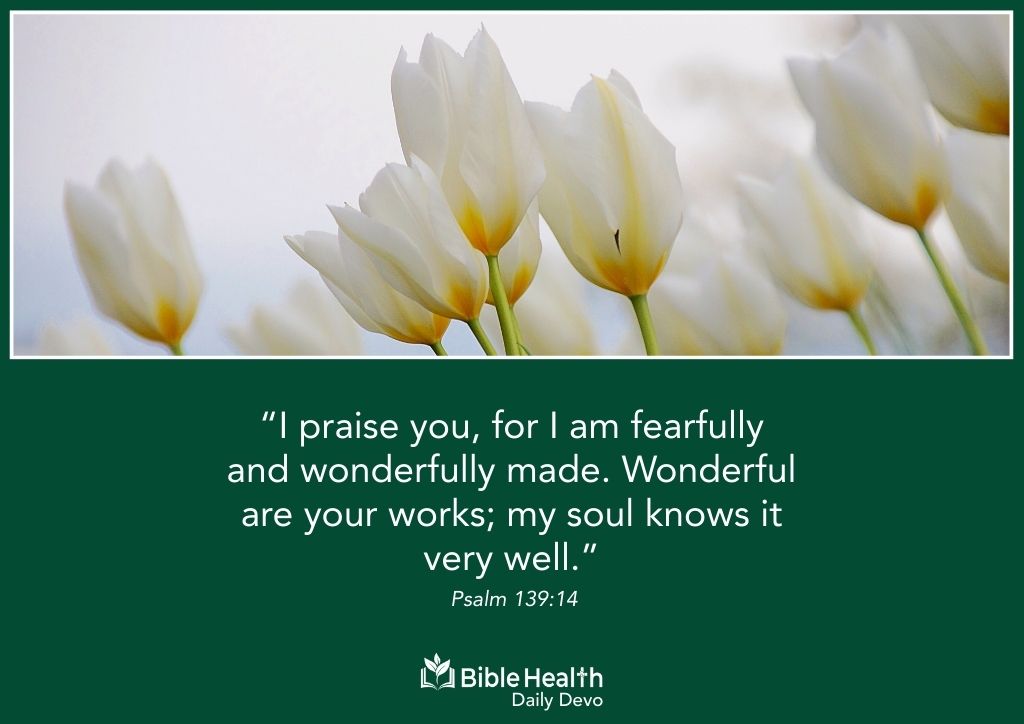


~ Psalm 139:14
Subscribe to this podcast on iTunes | Spotify
David wrote Psalm 139 as a deeply personal reflection on God’s intimate involvement in human life. He speaks of God forming him, knowing him, and sustaining him at every stage. This verse is not abstract theology. It is a declaration rooted in awareness. David is acknowledging that his very existence is intentional, crafted with care and wisdom.
The phrase “fearfully and wonderfully” does not imply fear in the sense of anxiety. It reflects awe, reverence, and precision. The Hebrew language emphasizes intentional craftsmanship. David is recognizing that God’s work is not careless or random. It is deliberate, thoughtful, and good. This includes the body, not just the soul.
This matters because many people struggle with subtle dissatisfaction toward how they were made. Comparison, frustration, or shame can quietly shape how the body is treated. Psalm 139 confronts that mindset directly. God’s design is not flawed. His work is wonderful, even when it is not fully understood. God does not cause sickness or dysfunction. Brokenness arises when His design is ignored or overridden, not because it is deficient.
This verse fits naturally into the theme of spring and new beginnings. Spring highlights design. Seeds know when to sprout. Leaves know how to unfold. Life follows patterns embedded by the Creator. In the same way, the human body carries built in wisdom. When conditions align with God’s design, the body often responds with resilience and balance.
This speaks clearly into Biblical health. Health is supported when the body is treated as something designed, not managed as a problem. Respecting hunger cues, honoring rest, and choosing nourishment that aligns with creation are ways of cooperating with God’s workmanship. God made real foods to work with the body’s systems. Ultra processed foods often interfere with those systems by overwhelming natural regulation and appetite signals.
David says his soul knows this truth very well. That suggests more than intellectual agreement. It points to internal assurance. When a person believes they are designed well, care becomes more natural. Stewardship replaces control. Patience replaces frustration.
This verse also challenges the tendency to separate spiritual life from physical life. God’s works include both. Honoring God includes honoring how He formed the body. This does not require perfection. It requires respect and responsiveness.
Spring renewal flourishes where trust in design is restored. Growth happens best when life is supported rather than forced. Psalm 139:14 invites us to view the body not as an obstacle to faith, but as part of God’s intentional work.
As this new season unfolds, this verse offers grounding truth. You were not assembled hastily. You were designed with care. Living from that truth changes how choices are made and how renewal is approached.
Prayer: Father, thank You for creating me with wisdom and intention. Help me honor the work of Your hands, including the body You designed. Teach me to care for myself with respect rather than criticism. Guide my habits and choices so they align with Your design and support the renewal You are bringing in this season. Amen.