


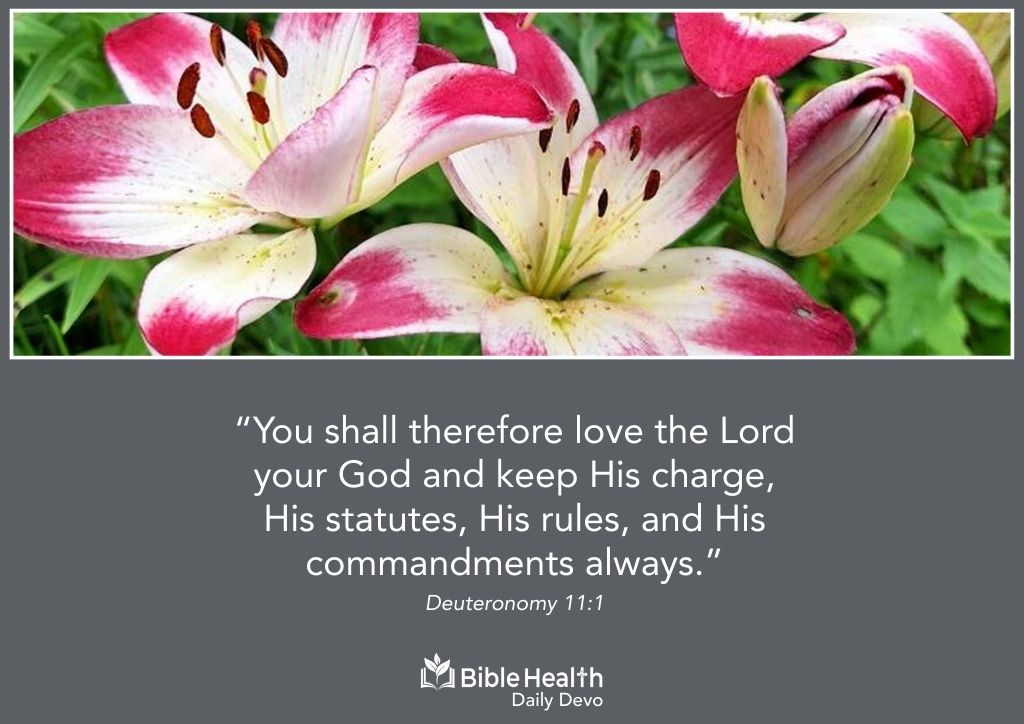


~ Deuteronomy 11:1
Subscribe to this podcast on iTunes | Spotify
Deuteronomy records Moses’ final teachings to Israel as they prepare to enter the Promised Land. This generation stands on the edge of fulfillment after decades of wandering. Moses does not begin with strategy or warning. He begins with love. Obedience, in this passage, is not framed as burden or control. It flows directly from relationship with God.
The structure of the verse is intentional. Love comes first. Obedience follows. Israel is not told to obey in order to earn God’s favor. They are called to obey because they belong to Him and have witnessed His faithfulness. Moses repeatedly reminds them of what God has done before instructing them on how to live. Obedience is presented as a response to grace, not a requirement for acceptance.
The phrase “keep His charge” implies careful attention and guarding. Obedience is not careless compliance. It is intentional alignment. God’s instructions were given to protect life, preserve order, and sustain the people in a land where competing influences would challenge their loyalty. Obedience was meant to anchor them amid abundance and temptation.
This truth speaks clearly to Biblical health. God does not cause sickness, and He does not give commands arbitrarily. His design for life includes boundaries that protect rather than restrict. Obedience in daily habits reflects trust in God’s wisdom. When boundaries are ignored, strain often follows. When they are honored, stability increases.
In the realm of health, obedience often looks practical rather than dramatic. Honoring rhythms of rest instead of constant productivity. Choosing nourishment that supports the body rather than exploiting cravings. God-made foods align with obedience because they reflect provision as God designed it.
Ultra-processed foods often conflict with this design. They encourage excess, override natural signals, and normalize imbalance. Obedience involves discernment about what enters the body and how it is treated.
Obedience also guards the heart. It simplifies decision-making. When life is oriented around God’s instruction, fewer choices are driven by impulse or pressure. This reduces internal conflict and supports emotional steadiness. Over time, the body benefits from this order. Stress decreases. Resilience grows.
Moses emphasizes obedience always, not occasionally. Consistency matters. Obedience is not reserved for crisis moments. It shapes daily life. This steadiness prepares God’s people to live well in seasons of blessing as much as in hardship.
Being chosen for obedience means God trusts His people with responsibility. Obedience is not a sign of weakness. It is evidence of relationship and confidence in God’s care. When obedience flows from love, it becomes life-giving rather than heavy.
The Holy Spirit reminds us that obedience is woven into covenant life. It keeps people aligned with truth, protected by wisdom, and grounded in trust. Obedience sustains life when it is practiced as a response to love.
Prayer: Father, thank You for calling me to obedience that flows from love, not fear. Help me trust Your instructions as expressions of Your care and wisdom. Teach me to align my daily habits, rhythms, and choices with what You have designed for life. Guard my heart from resistance and distraction, and let my obedience reflect gratitude, faithfulness, and confidence in Your goodness.